“I Poured My Soul Into It. I’m Hurt”: Juan Carlos Ferrero Is Ready to Talk
The highly successful seven-year partnership between coach Juan Carlos Ferrero and tennis prodigy Carlos Alcaraz, which yielded six Grand Slams, came to an unexpected end on December 17, 2025. Alcaraz publicly announced the separation with warm words, thanking Ferrero for helping turn his childhood dreams into reality. Ferrero's concise but poignant reply, "I would have liked to continue," immediately suggested a deeper, untold story.
This single sentence ignited weeks of rumors, leaks, and veiled statements, playing out as a distinctly Spanish drama largely through unspoken cues. Now, as Alcaraz progresses through Indian Wells on a 12-match winning streak, Ferrero is finally prepared to offer his complete narrative. He is scheduled to appear on the Spanish television program El Cafelito this Thursday at 3:30 PM, promising a thorough explanation of the events. A preview of the interview has already reignited discussions, with Ferrero telling host Josep Pedrerol, “I’m very happy to have been able to tell my story. Often, a phrase or two is enough to spark speculation, and these interviews allow for in-depth discussions.”
Ferrero to Speak Out on Alcaraz Split: The Unfolding Story
The Timeline and the Question of Motivation
The core facts are simple: after the 2025 season concluded, contract renewal discussions began but failed to reach an agreement. Initial reports from Spanish radio journalist Javier de Diego suggested the relationship fractured over contract negotiations. However, Ferrero swiftly countered any notion that finances were the primary issue. In his first interview with Marca, he stated, “There’s been talk that I was asking for more, and, indeed, they always showed me consideration by giving me a very high percentage for those early years. I tried to make it clear that money wasn’t one of the problems, nor the reason why I was part of this project.”
If not money, then what caused the rift? Several intertwined factors have emerged. A consistent theme across various accounts points to the increasing influence of Alcaraz’s father and the family’s growing control over crucial decision-making. A source close to the Alcaraz camp revealed to CLAY and RG Media that “there were significant disagreements between Ferrero and Alcaraz’s father about how to manage the player’s career.” Carlos Santos, Alcaraz’s first childhood coach, was even more direct, asserting, “Carlos’s father is the one who’s really in charge. Carlitos has nothing to do with it. I mean, Carlitos would have continued for as long as Juan Carlos wanted.”
Sports Illustrated’s Jon Wertheim reported a related tension: Ferrero's unwavering commitment to discipline and focus was increasingly at odds with the burgeoning commercial empire surrounding Alcaraz. Ferrero believed that to maximize his immense potential, Alcaraz required intense focus and rigorous training, not a packed schedule of photo shoots and corporate appearances. This perspective put him in direct conflict with those managing the player’s lucrative off-court ventures.
Ferrero, in his Marca interview, also hinted at more subtle, mundane issues. He acknowledged that prolonged time together inevitably leads to "wear and tear," and that certain problems were never fully discussed. “Perhaps they could have been resolved if we had sat down to talk, but in the end we didn’t.” A telling detail was his admission that he never directly informed Alcaraz of his departure, assuming the player was aware through his inner circle. This suggests a dynamic where the father acted as an intermediary, a point not lost on attentive readers.
Ferrero described a breakdown in negotiations that moved "from the court to the boardroom," involving what he termed “non-sporting clauses.” Veteran coach Toni Nadal, known for his directness, refused to accept Alcaraz as a passive party in the decision, stating, “I understand that nothing is done without Carlos’ approval, of course.” Former player Pablo Carreno Busta drew a parallel many had privately considered, comparing the split to Rafael Nadal’s eventual separation from his uncle Toni, implying that some coaching relationships simply reach a natural ceiling regardless of their success.
The Aftermath and Lingering Impact
Alcaraz’s public reactions have been carefully measured and cordial, though not particularly revealing. At his Melbourne press conference, he described it as “a mutual decision” and affirmed, “No decision is made without discussing it together.” Later, after clinching the Australian Open—his seventh Grand Slam and first without Ferrero in his box—he admitted to experiencing “certain doubts” after reading negative comments following the decision, but ultimately insisted, “We saw that we needed a change.”
The resulting picture, even with some details missing, is clear: a dedicated coach who poured his soul into the project and wished to continue, an increasingly powerful inner circle that made that continuation impossible, and a player caught in the middle, publicly maintaining composure while continuing to achieve major success.
Some observers have noted subtle shifts in Alcaraz’s on-court behavior since the split. Ferrero had always insisted on fierce discipline and focus between points. Recently in Doha, Alcaraz lashed out at a chair umpire over a time violation, a reaction that might have been handled differently with his former coach present.
None of this, however, diminishes the remarkable achievements of their partnership. Six major titles were secured from a collaboration that began when Alcaraz was just fifteen years old, discovered and developed at Ferrero’s academy in Villena. It stands as arguably the most successful coaching project in men’s tennis this decade, measured purely by its results. Ferrero conducted his initial Marca interview at the very academy where it all began, the same facilities where Alcaraz was molded as a junior—a detail almost too symbolic to be accidental.
He carries an open wound and a story not yet fully told. This Thursday, he will finally tell it.
Fresh materials — Football News

Kosovo vs. Austria: Live TV and Streaming Options Today
The UEFA Nations League B match between Kosovo and Austria is scheduled to take place on October 4, 2026, at 6:00 PM. The game will be available for viewing on DAZN. Match Details Kickoff Time: October 4, 2026, 6:00 PM Broadcast Channel: DAZN Team Form and Recent Performance

Juventus Eyes Folarin Balogun, But Faces Competition
Juventus continues to follow Folarin Balogun, the Monaco forward who could become a key name for the club's offensive overhaul planned for summer 2027. The 2001-born player is on the shortlist of strikers being considered by the management, alongside Benjamin Sesko and Brian Brobbey. Balogun o
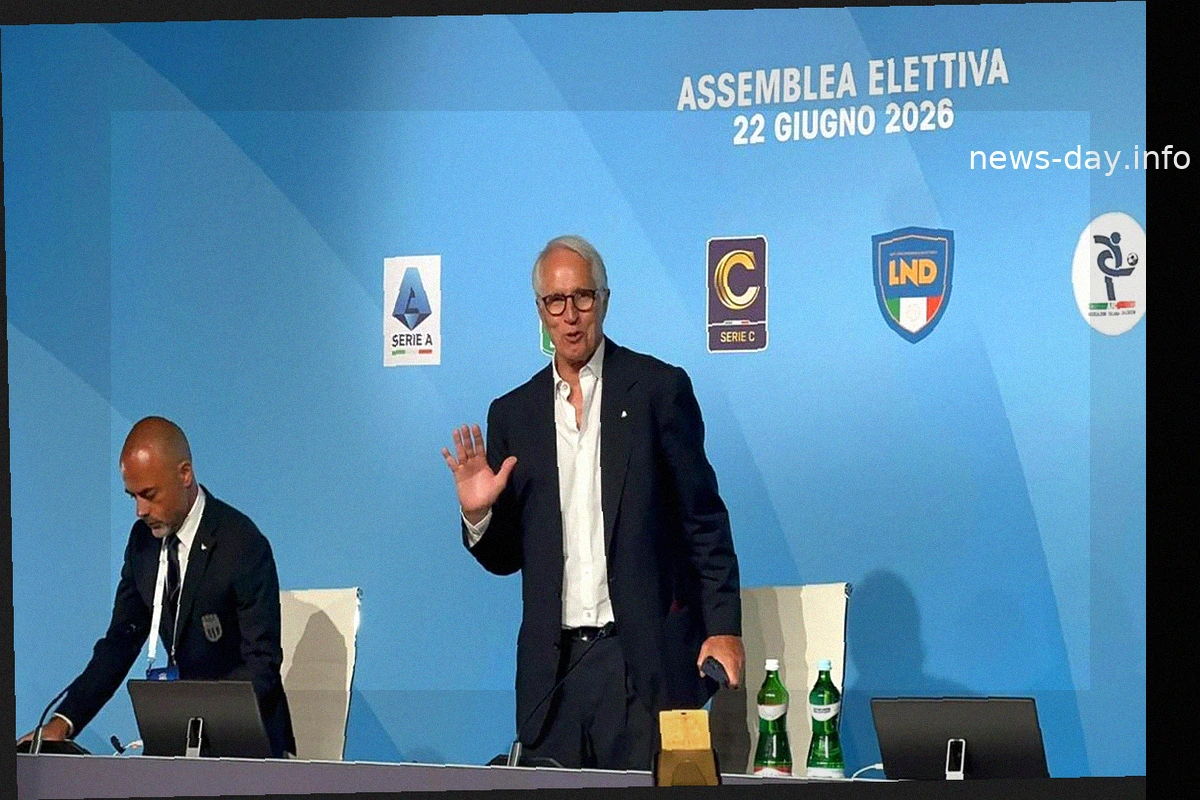
FIGC Election: Coni's Stance on Eligibility, No Immediate Commissariamento
Legal opinions obtained by ANSA indicate that FIGC membership was a fundamental requirement for the presidency, a status Giovanni Malagò lacked. These documents, from lawyers Franco Gaetano Scoca, Luigi Medugno, Massimo Coccia, and Alberto Angeletti, confirm the invalidity of an electi

Barcelona Follows Nicolò Tresoldi
Barcelona is tracking Nicolò Tresoldi, a striker for Club Brugge. Born in Cagliari, Tresoldi has also been linked with Juventus, and his estimated value has now reached approximately 25 million euros. Another young striker is making significant waves in the European transfer market, and his n
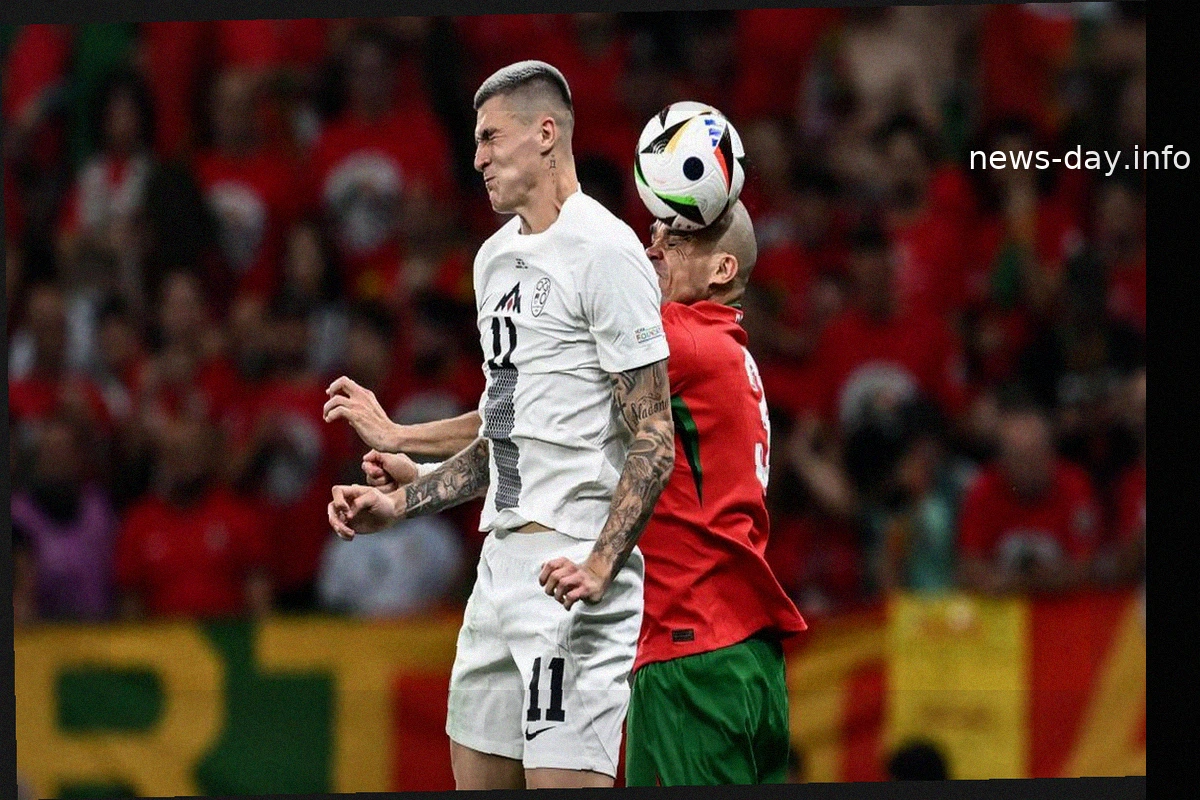
Juventus considers Benjamin Sesko for summer attack
Juventus is eyeing Benjamin Sesko to bolster their forward line. The Slovenian striker from Manchester United is valued at approximately €75 million and is also a target for Barcelona in 2027. Juventus is already planning for its attacking future, with Benjamin Sesko, the young Slovenian ce

Emotions-Rollercoaster: Zidanes Debüt im Stade de France
The outcome was disappointing. In his first home match as the French national team coach, Zinedine Zidane had to settle for a 1:1 draw against Italy. He later described this as 'frustrating' – yet his feelings were entirely different at first.